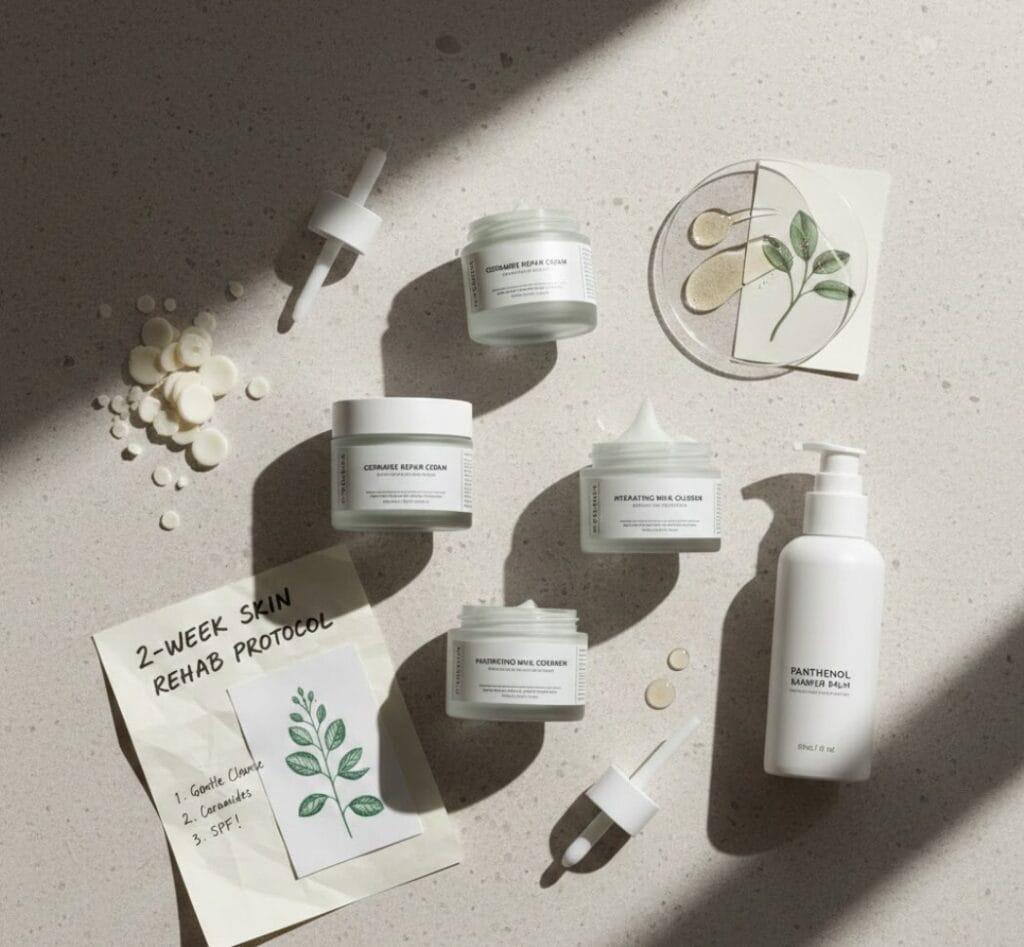
Stinging, redness, and constant breakouts? Your skin barrier might be compromised. Discover the science-backed 2-week routine to repair a damaged skin barrier using ceramides, soothing ingredients, and the “Skinimalism” approach for a healthy, glowing complexion.
Have you ever applied a gentle moisturizer only to feel an unexpected, stinging burn? Or perhaps your skin looks “shiny” and tight, yet it feels incredibly dry and flaky underneath? If your skin has suddenly become reactive, red, or prone to “random” breakouts that won’t go away, you aren’t just having a bad skin day—your skin barrier is likely compromised.
In the world of modern skincare, we are often told that “more is better.” We layer acids, retinoids, and high-strength vitamins, hoping for a glass-skin finish. However, the unintended consequence is often a broken defense system. Today, we are diving deep into the science of the skin barrier and providing a comprehensive, 2,000-character guide to rebuilding your skin’s natural shield.
Understanding the “Brick and Mortar” Model
To fix the problem, you must understand what it is. Think of your skin’s outermost layer, the stratum corneum, as a brick wall. The bricks are your skin cells (corneocytes), and the mortar is a complex mixture of lipids—specifically ceramides, cholesterol, and fatty acids.
When this “mortar” is healthy, it performs two vital functions:
- Water Retention: It prevents Transepidermal Water Loss (TEWL), keeping your skin plump and hydrated.
- Protection: It acts as a physical shield against bacteria, pollutants, and environmental irritants.
When the barrier is damaged, the “mortar” cracks. Moisture leaks out, and irritants seep in. This leads to the cycle of inflammation, sensitivity, and dehydration that many struggle to fix.
5 Red Flags of a Damaged Barrier
Before starting a repair routine, confirm if your skin is actually damaged or just naturally sensitive. Look for these five signs:
- Extreme Reactivity: Products that used to work perfectly now cause redness or itching.
- The “Dehydrated Shine”: Your skin looks reflective like plastic but feels tight and uncomfortable.
- Texture Changes: Rough, sandpaper-like patches or tiny, fluid-filled bumps.
- Chronic Redness: A persistent pink or red hue that doesn’t subside after cooling down.
- Slow Healing: Acne marks and small scratches take weeks longer than usual to disappear.
The 2-Week “Skin Rehab” Protocol
If you checked more than two boxes above, it’s time to hit the “reset” button. For the next 14 days, your goal is protection, not correction.
1. The “Skinimalist” Cleansing Rule
Stop the double-cleansing for now. Most oil cleansers and foaming washes contain surfactants that strip the very lipids you are trying to rebuild. Switch to a non-foaming, pH-balanced milk cleanser.
- Action: Wash with lukewarm water only in the morning. Use a gentle milk cleanser at night to remove sunscreen.
2. The “Golden Trio” of Ingredients
To rebuild the barrier, you must feed it what it’s made of. When shopping for a recovery cream, look for the 1:2:1 ratio of:
- Ceramides: To fill the gaps between cells.
- Cholesterol: To improve elasticity.
- Fatty Acids: To provide a smooth, protective surface.
- Bonus Ingredient: Panthenol (Vitamin B5) is a humectant that also acts as a soothing agent to stop the “sting” immediately.
3. Eliminate All “Actives”
This is the hardest part for skincare enthusiasts. You must pause your Vitamin C, Retinol, AHAs (Glycolic/Lactic Acid), and BHAs (Salicylic Acid). These ingredients promote cell turnover, which is the last thing a fragile barrier needs. Focus purely on hydration and occlusion.
4. The Power of Occlusives
At night, your skin loses the most moisture. To prevent this, apply a thin layer of an occlusive balm (like petrolatum-based ointments or Cica balms) over your moisturizer. This creates a “second skin” that allows your real skin to heal underneath without environmental stress.
Common Mistakes to Avoid
- Over-masking: Sheet masks often contain preservatives and fragrances that can penetrate deeper into a damaged barrier, causing more irritation.
- Hot Water: It may feel good, but hot water emulsifies your natural skin oils and flushes them away. Use “room temperature” water.
- Frequent Exfoliation: Even a “gentle” scrub is a disaster for a broken barrier. Let your dead skin cells fall off naturally as the barrier heals.
Recovery Timeline
- Days 1–3: You will notice a decrease in stinging and immediate redness.
- Days 4–7: Texture begins to smooth out, and the “tight” feeling subsides.
- Days 8–14: Your skin will start to feel “resilient” again. It won’t react as easily to wind or temperature changes.
Once you reach the 14-day mark without any stinging or redness, you can slowly reintroduce your active ingredients—one at a time, starting twice a week.
Final Thoughts
A damaged skin barrier is a lesson in patience. Your skin is a living organ with an incredible ability to heal itself if you simply stop interfering. Focus on hydration, ceramides, and sun protection. By respecting your skin’s natural limits, you’ll achieve a glow that no amount of acid or retinol can replicate.