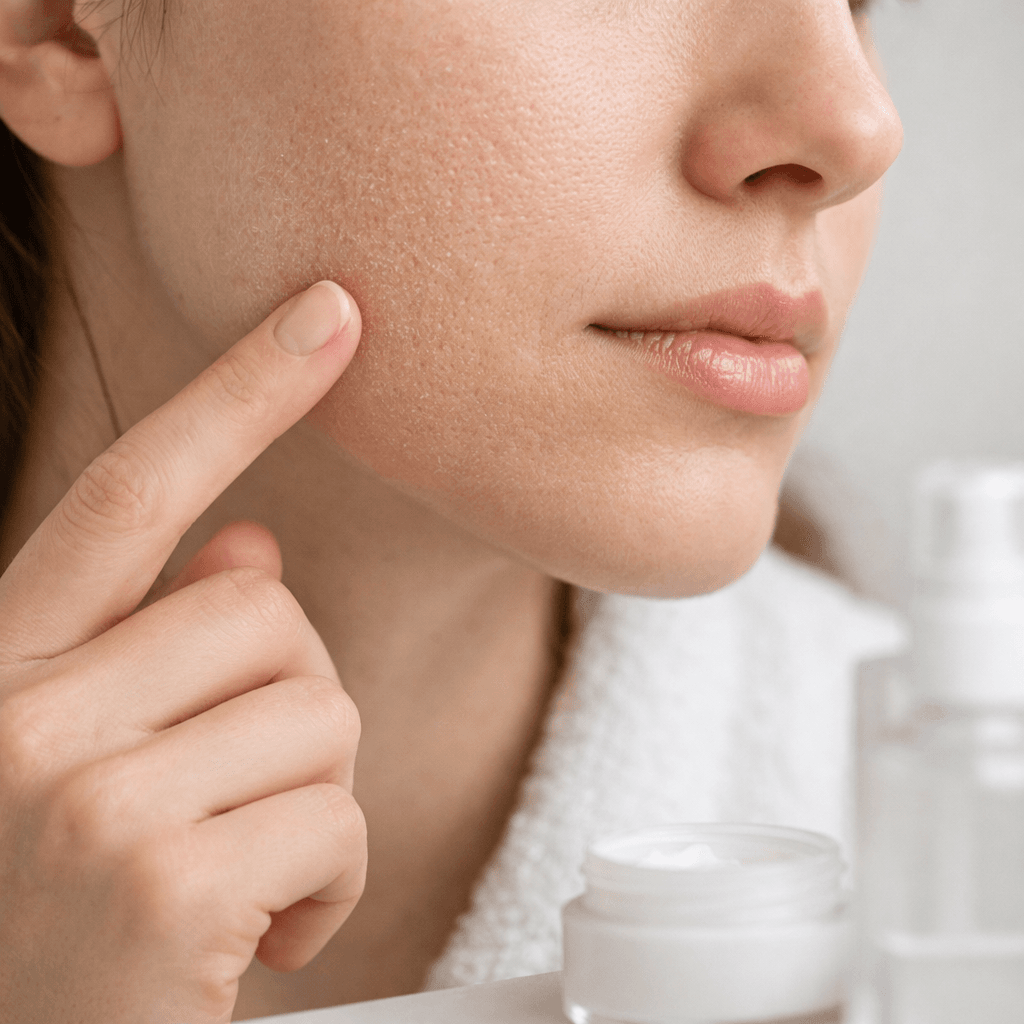
Many people describe their skin as “dry”
when something feels wrong.
But sometimes the real issue is not dryness.
It is texture.
Skin can feel rough, uneven, or unfamiliar
even when it does not look dry at all.
Rough Skin Is Often About Surface Stress
Dry skin usually feels tight.
Rough skin feels uneven.
When the skin surface is stressed,
it does not shed evenly.
This can create:
- a bumpy feeling
- makeup that sits strangely
- skin that looks fine but feels off
The issue lives on the surface,
not deep inside the skin.
Why This Can Happen Suddenly
Texture changes often feel sudden,
but they usually build quietly.
Common triggers include:
- repeating the same routine without breaks
- daily friction from towels or masks
- over-cleansing without realizing it
- constant low-level irritation
None of these look dramatic on their own.
Together, they affect how the skin renews itself.
Why Adding Moisture Does Not Always Fix It
When skin feels rough,
many people add heavier products.
Sometimes this helps.
Sometimes it does nothing.
That is because roughness is not always about
lack of moisture.
If the surface is irritated or uneven,
adding more layers can make skin feel coated
without feeling smoother.
The Difference Between Dryness and Texture
Dry skin:
- feels tight
- improves quickly with moisture
Rough skin:
- feels uneven
- improves slowly with stability
Confusing the two often leads to frustration.
What Helps Skin Texture Settle
Texture improves when skin feels:
- predictable
- undisturbed
- consistently treated
This usually means:
- fewer adjustments
- gentler contact
- allowing time between changes
Skin smoothness often returns gradually,
not overnight.
Final Thoughts
Not all discomfort means dryness.
Not all roughness needs stronger solutions.
Sometimes skin feels rough
because it has been handling too much,
for too long.
When the surface finally gets a break,
texture often improves quietly
— without dramatic intervention.