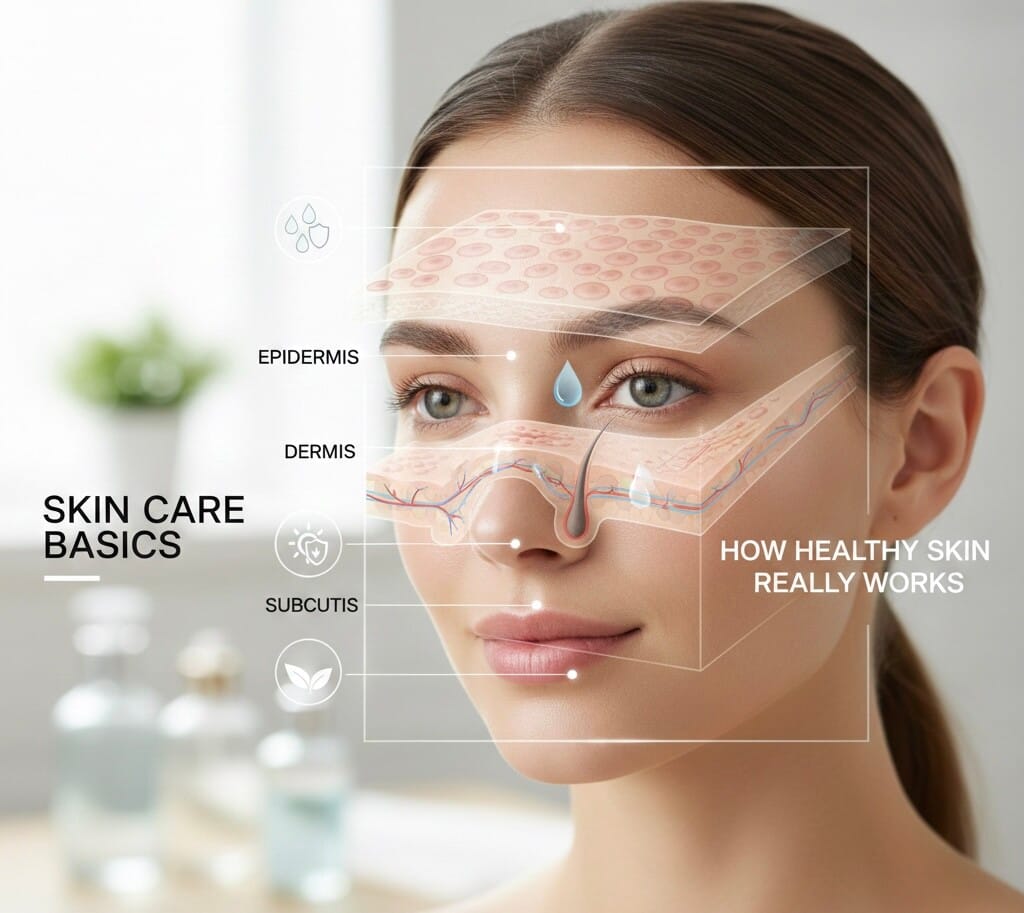
Skin is more than just what you see in the mirror. It is the body’s largest organ and your first line of defense against the outside world. Healthy skin protects you from bacteria, pollution, UV damage, and moisture loss. Yet many people focus only on appearance, not function, when it comes to skin care.
Understanding how skin works is the first step to building a routine that actually improves skin health, not just short-term looks.
What Is Skin and Why Is It Important?
Skin is made up of multiple layers, each with a specific role. Together, these layers regulate temperature, protect internal organs, and maintain hydration.
Healthy skin:
- Retains moisture effectively
- Recovers quickly from irritation
- Appears smooth and balanced
- Reacts less to environmental stress
When the skin barrier is damaged, problems like dryness, redness, acne, and sensitivity become more common.
The Skin Barrier: The Foundation of Good Skin
The outermost layer of skin acts as a protective barrier. It keeps water inside and harmful substances outside. Many common skin problems start when this barrier is weakened.
Causes of a damaged skin barrier include:
- Over-cleansing
- Excessive exfoliation
- Harsh skincare ingredients
- Environmental stress such as cold air or pollution
A strong barrier doesn’t mean oily or thick skin—it means balanced skin.
Common Skin Types and Their Needs
Every skin type can be healthy, but each has different needs.
Dry Skin
Needs hydration and gentle cleansing. Over-washing can make dryness worse.
Oily Skin
Needs balance, not stripping. Removing too much oil can trigger even more oil production.
Combination Skin
Needs targeted care for different areas rather than one aggressive routine.
Sensitive Skin
Needs minimal, calming products and consistency over experimentation.
Understanding your skin type helps prevent unnecessary irritation and product overload.
Simple Daily Habits That Improve Skin Health
Good skin care is less about doing more and more about doing things correctly.
Key habits that support healthy skin:
- Gentle cleansing once or twice daily
- Using lukewarm water instead of hot
- Moisturizing while skin is slightly damp
- Protecting skin from excessive sun exposure
- Allowing skin time to recover between treatments
Consistency matters more than product quantity.
Why Less Is Often More in Skin Care
Many people damage their skin by constantly switching products or layering too many active ingredients. Skin needs stability to function properly.
Signs you may be overdoing skin care:
- Persistent redness
- Tightness after cleansing
- Sudden sensitivity to products you used before
- Breakouts despite “good” products
Reducing steps can often improve skin faster than adding new ones.
Skin Health Is Connected to Lifestyle
Topical products help, but skin health is also influenced by daily habits.
Lifestyle factors that affect skin:
- Sleep quality
- Stress levels
- Hydration
- Diet consistency
- Environmental exposure
Skin often reflects what’s happening internally, not just externally.
Long-Term Skin Care Mindset
Healthy skin is built gradually. There is no instant fix, and chasing quick results often leads to setbacks. The goal should be stable, resilient skin that functions well over time.
Instead of asking “How can I change my skin fast?”, a better question is:
“How can I support my skin every day?”
That mindset shift alone can transform how your skin looks and feels.
Final Thoughts
Skin care doesn’t need to be complicated. When you focus on protecting the skin barrier, understanding your skin type, and maintaining simple habits, results follow naturally.
Healthy skin is not about perfection.
It’s about balance, patience, and consistency.