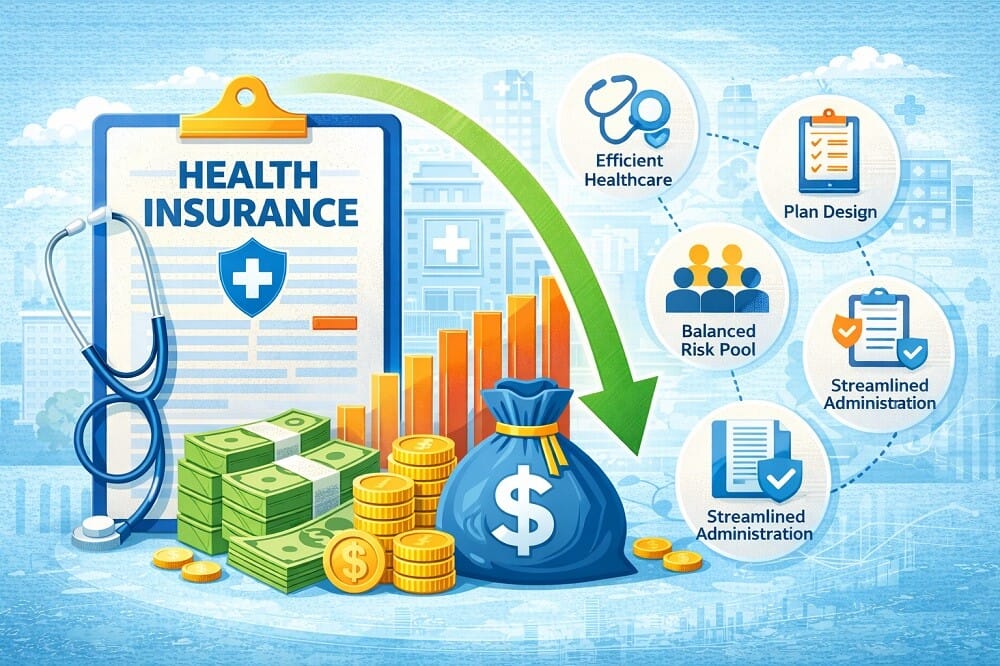
Rising health insurance costs often lead people to ask how those costs can be reduced. This question usually comes from observing higher premiums, deductibles, or out-of-pocket expenses when enrolling in new plans. While cost increases are driven by many forces, the idea of reduction is also connected to how insurance systems are designed and managed.
From an everyday explanations perspective, lowering health insurance costs is not about a single action or shortcut. Instead, it involves understanding the structural factors that influence pricing and how changes at different levels of the system can affect overall expenses. Viewing cost reduction as a process rather than a promise helps clarify what is realistically possible.
Healthcare spending patterns strongly influence insurance prices.
At the foundation of insurance pricing is total healthcare spending.
- Medical service prices determine how much insurers must pay for care.
- The frequency of medical use affects total claim volumes.
- Long-term treatment trends influence future cost expectations.
- Insurers adjust premiums to reflect these combined spending patterns.
When overall healthcare spending grows more slowly, insurance costs tend to stabilize over time. This relationship explains why discussions about cost reduction often begin with healthcare efficiency rather than insurance alone.
Because insurance reflects underlying medical expenses, structural efforts to manage healthcare costs indirectly influence premiums. This connection highlights why insurance cost reduction is usually gradual rather than immediate.
Plan design plays a role in how costs are distributed.
Health insurance plans are structured to balance risk and affordability.
- Premium levels reflect expected average costs.
- Deductibles determine how costs are shared before coverage begins.
- Copayments and coinsurance shape out-of-pocket exposure.
- Coverage limits affect overall financial protection.
Adjustments in plan design can shift how costs are allocated between insurers and policyholders. While this does not eliminate expenses, it can influence how costs appear and how they are spread across time.
Understanding plan structure helps explain why some plans feel more expensive upfront while others shift costs to later stages of care. Cost reduction in this context refers to redistribution rather than removal of expenses.
Risk pooling and population balance affect long-term affordability.
Insurance operates by pooling risk across many individuals.
- Larger pools spread costs more evenly.
- Balanced participation reduces concentration of high expenses.
- Stable enrollment supports predictable pricing.
- Long-term participation lowers volatility in premiums.
When risk pools are more balanced, insurers face less uncertainty. Lower uncertainty allows for more stable pricing models over time. This stability is often discussed as a pathway toward cost moderation.
From a system perspective, affordability improves when risk is broadly shared. This principle explains why discussions about cost reduction often focus on participation patterns rather than individual behavior.
Administrative efficiency influences overall insurance expenses.
Beyond medical care, administrative processes add to insurance costs.
- Billing systems require resources and coordination.
- Regulatory compliance involves ongoing operational expenses.
- Claims processing affects overhead costs.
- Streamlined administration reduces non-medical spending.
Efforts to improve efficiency in these areas can reduce indirect costs built into premiums. While these savings may be modest individually, their cumulative effect can influence long-term pricing trends.
Administrative efficiency is often less visible to consumers, but it remains an important factor in discussions about affordability. Reducing complexity at the system level supports gradual cost control.
Economic conditions shape the pace of cost changes.
Health insurance costs are also shaped by broader economic forces.
- Inflation affects wages and facility operations.
- Labor market conditions influence provider expenses.
- Supply chain costs impact medical equipment pricing.
- Economic stability supports predictable insurance pricing.
When economic pressures ease, insurance costs may grow more slowly. This connection explains why cost reduction is often discussed in terms of moderation rather than reversal.
Understanding economic influence helps place insurance costs in a wider context. It shows that changes are often linked to external conditions rather than isolated insurance decisions.
Conclusion
Health insurance costs can be reduced only through structural changes that affect healthcare spending, plan design, risk pooling, administration, and economic conditions. Rather than a single solution, cost moderation emerges from how these elements interact over time. An everyday explanations approach helps clarify why reduction is gradual and system-driven.
By understanding these underlying mechanisms, readers can better interpret discussions about affordability. Health insurance costs reflect complex systems, and meaningful reduction depends on long-term structural alignment rather than immediate fixes. This perspective supports a clearer and more realistic understanding of how insurance pricing evolves.
For general educational background on factors influencing health insurance costs and affordability, neutral analysis from the Kaiser Family Foundation provides helpful context: https://www.kff.org/health-costs/