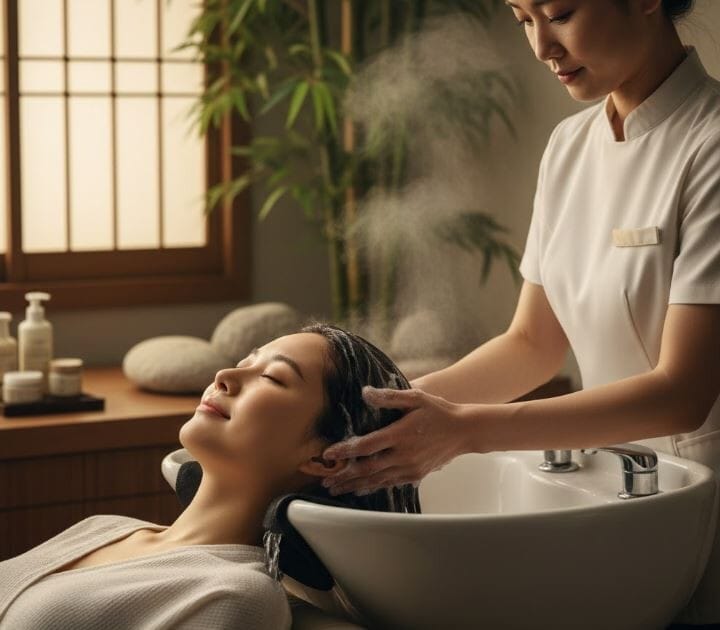
Japanese head spa treatments have recently become one of the most talked-about beauty and wellness trends in the United States. Short-form videos showing detailed scalp cleansing, flowing water techniques, and calming massage routines have spread rapidly on platforms such as TikTok and YouTube. As a result, many people are encountering the term for the first time and wondering what makes a head spa different from a normal salon wash.
From an everyday explanations perspective, a Japanese head spa is not simply an upgraded shampoo service. It represents a different way of thinking about hair care, where the scalp is treated as skin that requires its own form of attention. Understanding this concept helps explain why the trend resonates with audiences looking for both relaxation and visible care routines.
Japanese head spas focus on the scalp rather than just hair appearance.
At the core of a Japanese head spa is the idea that healthy hair begins with a healthy scalp.
Traditional salon shampooing usually serves as preparation for styling, with the primary goal of cleaning hair quickly before a haircut or blow-dry. In contrast, head spas treat the scalp as the main subject of care.
During a head spa session, techniques are designed to cleanse the scalp more thoroughly while maintaining comfort. Water pressure, temperature, and flow are carefully controlled to avoid irritation. The scalp is often massaged in a structured pattern that emphasizes circulation and relaxation rather than speed.
This scalp-centered approach explains why the experience feels fundamentally different from a regular salon visit. The focus shifts away from styling results and toward the condition of the skin beneath the hair.
The treatment structure emphasizes process and experience.
Japanese head spa sessions typically follow a structured flow rather than a quick wash-and-rinse routine.
- The scalp is gently examined or prepared before cleansing begins.
- Cleansing products are applied with deliberate massage techniques.
- Water flow is used as part of the experience, not just for rinsing.
- The session ends with drying or light finishing rather than full styling.
Each step is designed to feel intentional and calming. The pacing is slower, and the goal is consistency rather than efficiency. This structure contributes to why many viewers describe head spa videos as relaxing even when watched online.
Understanding this process helps explain why head spas are often associated with wellness rather than beauty alone. The emphasis is on sensation and routine, not transformation.
Social media plays a key role in the trend’s rapid growth.
One reason Japanese head spas gained popularity so quickly in the U.S. is their visual appeal.
The treatments translate well into short videos because they involve flowing water, visible foam, and repetitive hand movements. These elements naturally align with content formats designed to capture attention within seconds.
Unlike many beauty treatments that require explanation, head spa visuals communicate their appeal instantly. Viewers do not need technical knowledge to understand what they are seeing. The calming rhythm of the process is enough to spark curiosity.
This visibility has amplified interest beyond traditional beauty audiences. People who may not regularly follow hair or skincare trends still encounter head spa content through algorithm-driven feeds, contributing to the dramatic increase in search volume.
Why the trend resonates with wellness-focused audiences.
The rise of Japanese head spas aligns with broader wellness trends in the United States. Many consumers are increasingly interested in routines that emphasize care, relaxation, and maintenance rather than dramatic cosmetic change.
Head spas fit this mindset because they frame hair care as part of overall self-care. The experience emphasizes slowing down, focusing on comfort, and paying attention to areas often overlooked in daily routines. This framing makes the treatment feel approachable even to people who do not consider themselves beauty-focused.
The trend also reflects growing awareness of the scalp as an extension of skin care. As discussions about skin health become more common, it feels natural for attention to extend upward to the scalp.
Differences between head spas and regular salon shampooing.
Although both involve washing hair, the goals and methods differ significantly.
- Regular shampooing prioritizes speed and preparation for styling.
- Head spas prioritize sensation, routine, and scalp condition.
- Salon washes are usually brief and functional.
- Head spa sessions are longer and experience-driven.
These differences help explain why head spas are often offered as standalone services rather than add-ons. They are designed to be complete experiences rather than supporting steps.
Understanding this distinction prevents confusion when people encounter the term for the first time. A head spa is not meant to replace a haircut or styling session but to serve a different purpose altogether.
Cultural influence and perception play a role.
Japanese beauty and wellness practices often emphasize precision, routine, and balance. These values influence how head spas are structured and marketed. The calm, methodical nature of the treatments reflects a broader cultural preference for deliberate care.
When introduced to U.S. audiences, these characteristics stand out because they contrast with fast-paced salon environments. The difference in atmosphere becomes part of the appeal, especially for consumers seeking novelty without complexity.
This cultural framing adds to the sense that head spas offer something distinct, even though the underlying actions—washing and massaging—are familiar.
Why interest continues to grow rather than fade.
Unlike short-lived beauty fads, Japanese head spas benefit from repeat visibility and consistent messaging. The experience does not rely on dramatic before-and-after results, which can lose impact over time. Instead, it emphasizes process, making it endlessly shareable.
As more salons adopt similar services, the term becomes more familiar, reinforcing curiosity rather than exhausting it. This cycle supports sustained interest rather than a quick spike followed by decline.
The trend’s compatibility with wellness narratives also contributes to its longevity. As long as relaxation and self-care remain priorities, head spas are likely to remain relevant.
Conclusion
Japanese head spas have become popular in the United States because they offer a scalp-focused, experience-driven approach to hair care that aligns with modern wellness values. Their visual appeal on social media, combined with a clear difference from traditional salon shampooing, has fueled rapid awareness and curiosity.
Viewed through an everyday explanations lens, the trend is less about novelty and more about reframing routine care. By understanding how head spas differ in focus, structure, and purpose, readers can better interpret why this treatment has captured attention and why its popularity continues to grow.