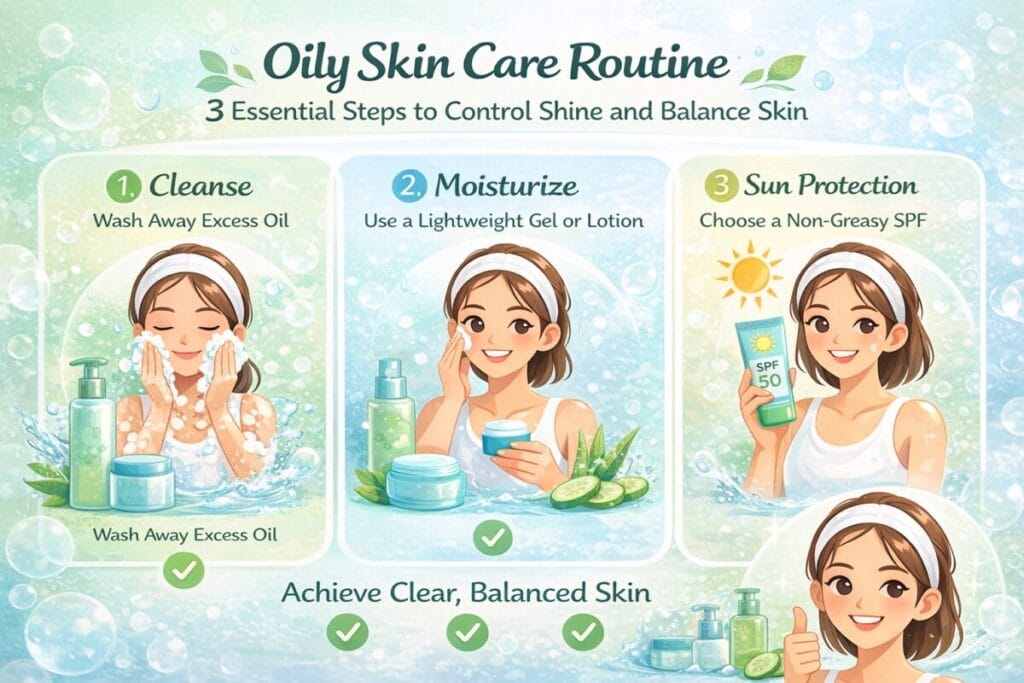
Oily skin is one of the most misunderstood skin types. Many people with oily skin believe they need to strip away oil completely to achieve clear and healthy skin. As a result, they often over-cleanse, skip moisturizer, or use harsh products. Unfortunately, these habits usually make oily skin worse instead of better.
An effective oily skin care routine focuses on balance, not removal. Oil itself is not the enemy. In fact, natural oil helps protect the skin barrier. The real problem begins when oil production becomes excessive due to irritation, dehydration, or improper skin care habits. With the right routine, oily skin can look healthy, calm, and comfortable.
Why Oily Skin Needs a Different Approach
Oily skin produces more sebum than other skin types. This can lead to shine, clogged pores, and breakouts if not managed properly. However, aggressively trying to eliminate oil often triggers the skin to produce even more oil as a defense mechanism.
A proper oily skin care routine works with your skin, not against it. By using gentle products and maintaining hydration, you can help regulate oil production naturally. Consistency is far more important than using strong or fast-acting solutions.
Cleansing for Oily Skin Without Over-Drying
Cleansing is a crucial step for oily skin, but over-cleansing is one of the most common mistakes. Washing the face too frequently or using strong cleansers can strip the skin of moisture and weaken the skin barrier.
For most people with oily skin, cleansing twice a day is enough. A gentle, low-foaming cleanser helps remove excess oil, sweat, and impurities without leaving the skin tight. After cleansing, the skin should feel fresh and balanced, not dry or squeaky clean. That tight feeling is often a sign that the cleanser is too harsh.
Using lukewarm water instead of hot water also helps reduce irritation and excess oil production.
Moisturizing Is Essential for Oily Skin
Skipping moisturizer is one of the biggest mistakes people with oily skin make. When the skin becomes dehydrated, it often produces more oil to compensate. This leads to increased shine and a higher chance of clogged pores.
A lightweight moisturizer helps maintain hydration and supports the skin barrier without making the skin feel greasy. Gel or lotion textures are usually ideal for oily skin. Applying moisturizer while the skin is slightly damp can help lock in moisture and improve comfort throughout the day.
Balanced hydration is one of the most effective ways to reduce excess oil over time.
Sun Protection Without the Greasy Feel
Sunscreen is essential for all skin types, including oily skin. However, many people avoid sunscreen because they worry it will make their skin look shiny or heavy. Skipping sunscreen can lead to long-term damage, uneven skin tone, and premature aging.
Choosing a lightweight sunscreen designed for daily use can help protect the skin without increasing oiliness. Sunscreen should be applied every morning as the final step of your routine. Consistent use matters more than applying a thick layer occasionally.
Protecting oily skin from sun damage also helps prevent post-breakout marks and uneven texture.
Understanding the Role of the Skin Barrier
The skin barrier plays a major role in oil regulation. When the barrier is healthy, the skin can retain moisture and regulate oil production more effectively. Harsh products, over-exfoliation, and frequent routine changes can damage the barrier and worsen oiliness.
Supporting the skin barrier through gentle cleansing, proper moisturizing, and sun protection allows oily skin to become more balanced over time. This approach often leads to fewer breakouts and less visible shine.
Common Mistakes People With Oily Skin Should Avoid
Many issues associated with oily skin are caused by habits rather than genetics. Over-washing, using alcohol-based products, skipping moisturizer, and constantly switching products can all disrupt the skin’s natural balance.
Another common mistake is expecting immediate results. Oily skin care requires patience. Improvements in oil control usually appear gradually as the skin adapts to a consistent routine.
How Long It Takes to See Improvement
Some people notice reduced shine and better comfort within a few weeks. However, long-term improvements such as clearer pores and more stable oil production take time. Consistency is key. Stick to a simple routine and allow your skin to adjust naturally.
Final Thoughts on Oily Skin Care
Oily skin does not need aggressive treatment. It needs balance, hydration, and consistency. By focusing on gentle cleansing, lightweight moisturizing, and daily sun protection, you can help your skin regulate oil production and look healthier over time.
Healthy oily skin is not about removing oil completely. It is about creating the right conditions for balance and long-term skin health.
3-Step Skincare Routine for Beginners (Morning & Night)
Is Your Skin Barrier Damaged? The Ultimate 2-Week Guide to Recovery
Stinging, redness, and constant breakouts? Your skin barrier might be compromised. Discover the science-backed 2-week…
Acne Control: Ultimate Guide to the Revolutionary “Towel-Free” Method
When it comes to Acne Control, most people spend hundreds of dollars on specialized cleansers,…
Is Your Towel the Silent Killer of Your Clear Skin? The “Towel-Free” Method for Acne
You invest in expensive cleansers, religiously apply salicylic acid, and change your pillowcases weekly. Yet,…
Exosomes Skincare: The “Ghost” Signal That Reverses Aging Better Than Retinol?
Why “Cellular Messaging” Is the Future of Flawless Skin If you thought PDRN (Salmon DNA)…
The “Hanbang” Revival: Why Fermented Ginseng Oil Is the New Gold Standard for Glass Skin
“Hanbang” – Forget Slugging with Vaseline. The Ancients Knew Better. In 2026, the skincare pendulum…
Spicules Skincare: The Shocking Truth About the “Prickly” Cream That Resurfaces Skin
Does It Really Contain Glass? The Ultimate Guide to Bio-Microneedling Imagine rubbing a cream onto…